

Hub for Metabolic Psychiatry ECR Capacity Building: SIRS 2026
Written by Dina Farran
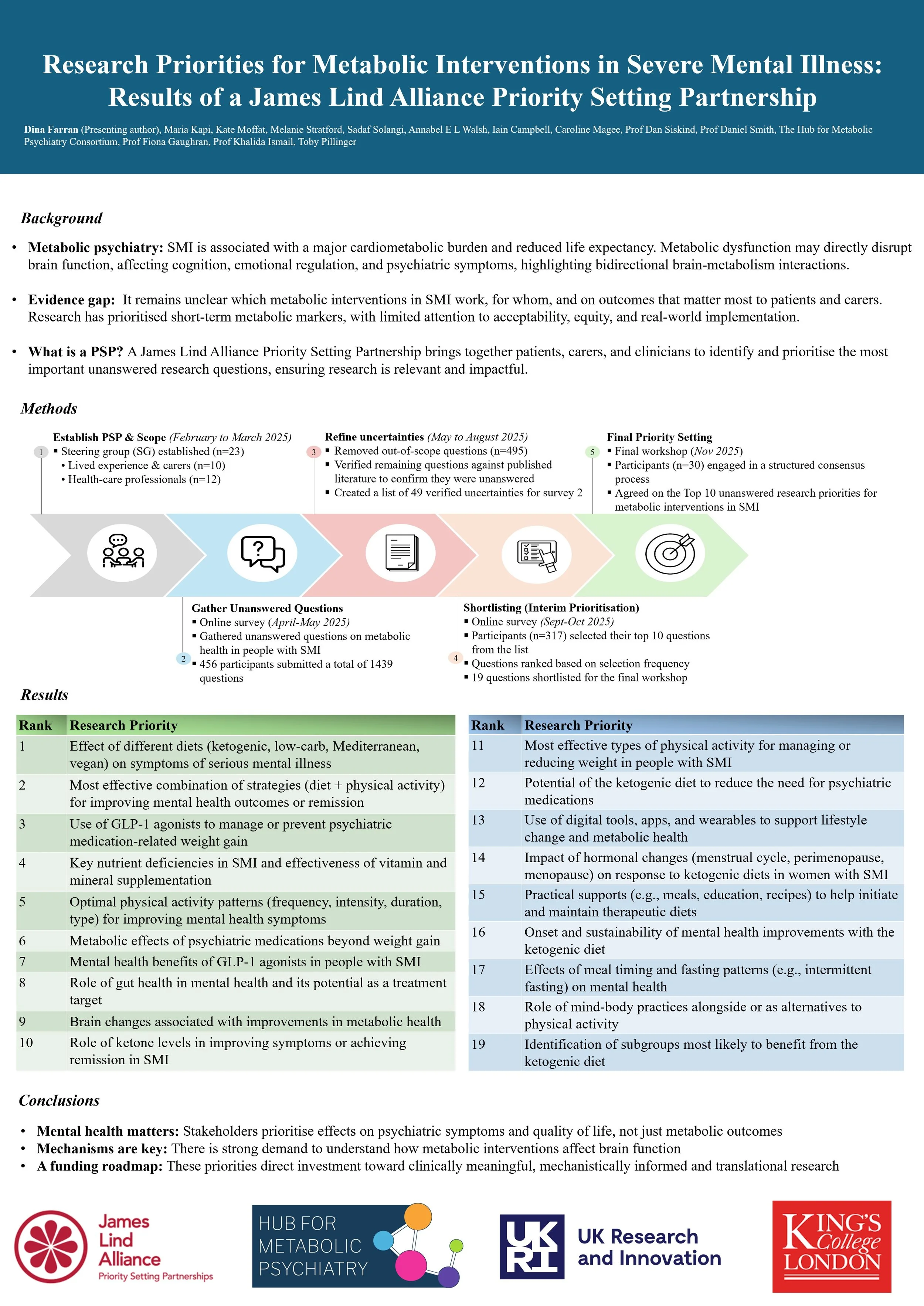
Presenting my poster at the Schizophrenia International Research Society (SIRS) 2026 Congress provided a valuable opportunity to share my work with an international audience of researchers, clinicians, and stakeholders working across psychosis and related fields. Supported by the Hub for Metabolic Psychiatry Early Career Researcher Capacity Building Fund, I presented “Research Priorities for Metabolic Interventions in Severe Mental Illness: Results of a James Lind Alliance Priority Setting Partnership” and engaged in discussions around its implications for future research.
My poster generated strong interest, particularly in the Priority Setting Partnership (PSP) approach itself. Many attendees were not familiar with this methodology and expressed appreciation for the involvement of people with lived experience of severe mental illness, alongside carers and clinicians, in identifying research priorities. This was seen as a valuable shift away from relying solely on researcher-driven agendas towards a more inclusive and relevant process. Attendees highlighted that this approach has important implications for directing funding toward research that addresses the needs and priorities of those most affected, ultimately increasing the potential for meaningful clinical impact.
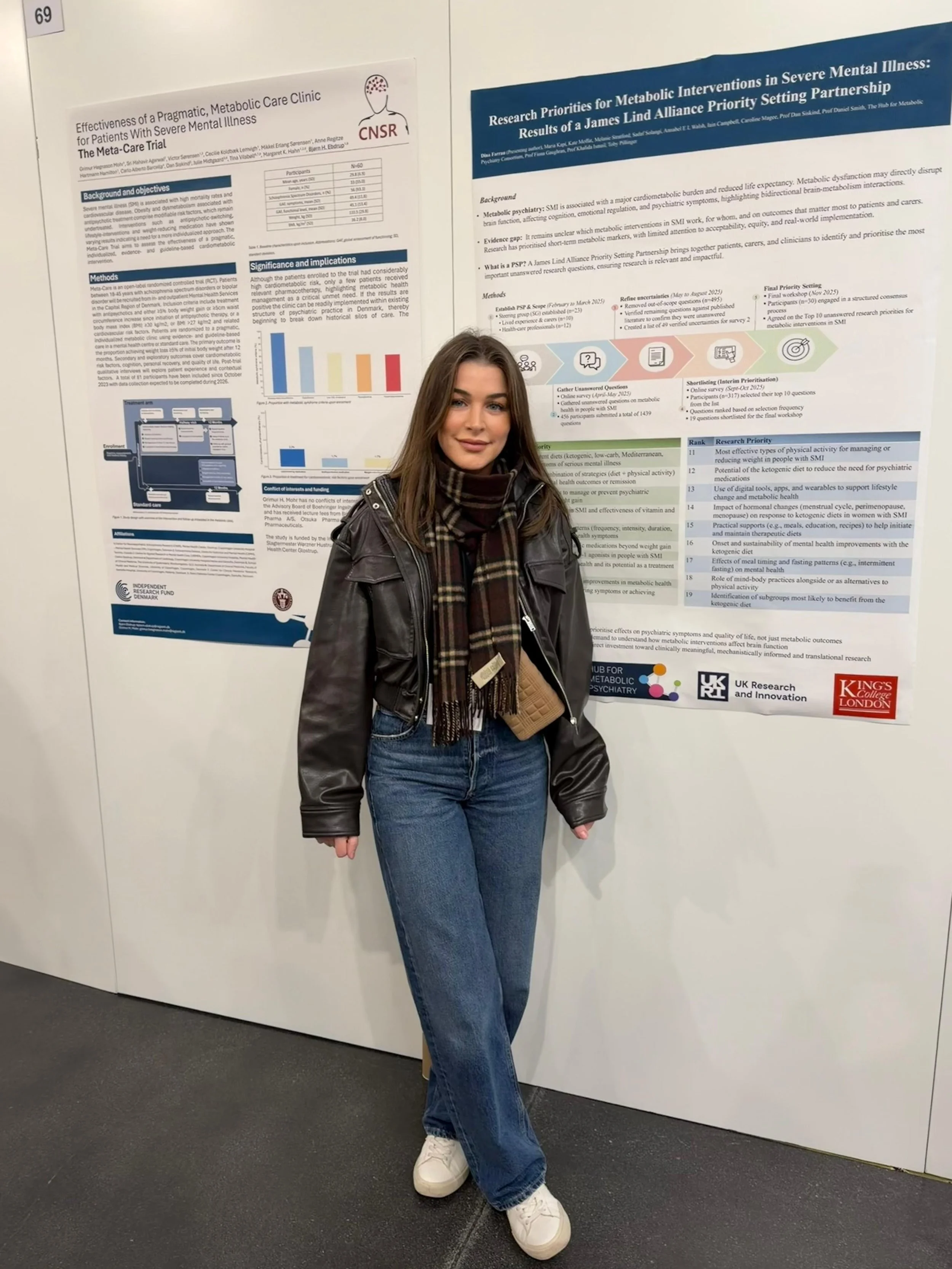
SIRS 2026 also provided valuable opportunities for visibility and collaboration. I had the opportunity to meet with the editor of The Lancet Psychiatry, where our manuscript is currently under review. In parallel, conversations with the Baszucki research group opened up promising avenues for future funding, particularly around one of our top-priority questions: the role of ketogenic diets in schizophrenia. I also connected with researchers from institutions including the University of Oxford and the University of Queensland, as well as colleagues from King’s College London, enabling the exchange of ideas and identification of shared research interests.
Beyond my own work, the conference offered important insights into emerging directions in psychiatric research. Several sessions focused on novel pharmacological targets beyond dopamine, such as muscarinic receptor agonists, alongside growing interest in immunological and inflammatory pathways. At the same time, metabolic interventions, particularly GLP-1 receptor agonists, featured prominently for their role in mitigating the metabolic side effects of psychotropic medications.
A particularly striking theme across multiple presentations was the increasing focus on long-acting injectable antipsychotics, which were highlighted for their benefits in improving clinical outcomes. These discussions also underscored important challenges in current treatment approaches, particularly the trade-offs associated with managing positive symptoms. Several presentations noted that treatments targeting positive symptoms may, in some cases, contribute to worsening cognition and negative symptoms, highlighting the need for a more balanced approach. There was a clear emphasis on developing interventions that not only address positive symptoms but also improve cognitive functioning and negative symptoms, which remain key determinants of long-term outcomes.
Across the programme, there was also strong emphasis on the heterogeneity of schizophrenia and the limitations of one-size-fits-all treatment approaches. The field is increasingly moving toward more personalised, mechanism-informed interventions. In parallel, presentations on digital tools, early intervention, and co-produced research highlighted the importance of accessibility, patient engagement, and real-world implementation.
Overall, attending SIRS 2026 was a highly valuable experience that strengthened both my research perspective and professional network. It provided an opportunity to share my work on an international stage, engage with leading experts, and identify future directions for collaboration and funding. Importantly, it reinforced the relevance and urgency of the Hub’s mission to advance clinically meaningful, mechanistically informed, and patient-centred metabolic interventions in severe mental illness.
The support from the Hub for Metabolic Psychiatry made this experience possible, enabling not only the dissemination of our research but also the development of connections and ideas that will shape my future work.